
(And What That Means for You as a Reader)
A note from me, Vincent, debut author and fantasy fan.
Here’s the thing: I’m not Brandon Sanderson. I’m not J.K. Rowling. I’m just a debut author who grew up devouring their fantasy books. Staying up way too late reading The Wheel of Time, getting lost in the intricate magic systems of Mistborn, feeling that gritty immersion. I played games such as The Witcher and watched movies like The Hunger Games. Suzanne Collins’ story and world-building really came alive with the visual differences in how people live in districts. With all that in mind, this blog is about why I write the way I do.
But when I sat down to write Blood & Water: Inner Fire, I realized something: the stories that stuck with me the most were the ones that made me feel like I was living them, not just watching them unfold.
So I want to tell you what makes this series different, and why I made the choices I did. Not because I think I’m doing something better than those incredible authors I admire, but because I wanted to create a reading experience that captures what I loved most about their work.
You’re Not Watching the Story. You’re Living It.
Some fantasy novels have what I call the “tour guide narrator.” You know the type, someone’s explaining the world to you. Providing context, making sure you understand the magic system before anything happens. And don’t get me wrong, that works beautifully in some books. J.R.R. Tolkien offers a narrator voice in his books. A gentle narrator that speaks to us with words such as “I suppose you know what a hobbit is, but…” Brandon Sanderson uses Third-Person Limited in his book The Way of Kings. You stick with one character and read about what he thinks in third person. In Dune, Frank Herbert also lets you read in third person, but never sticks to one character. You hear what multiple people think in one scene.
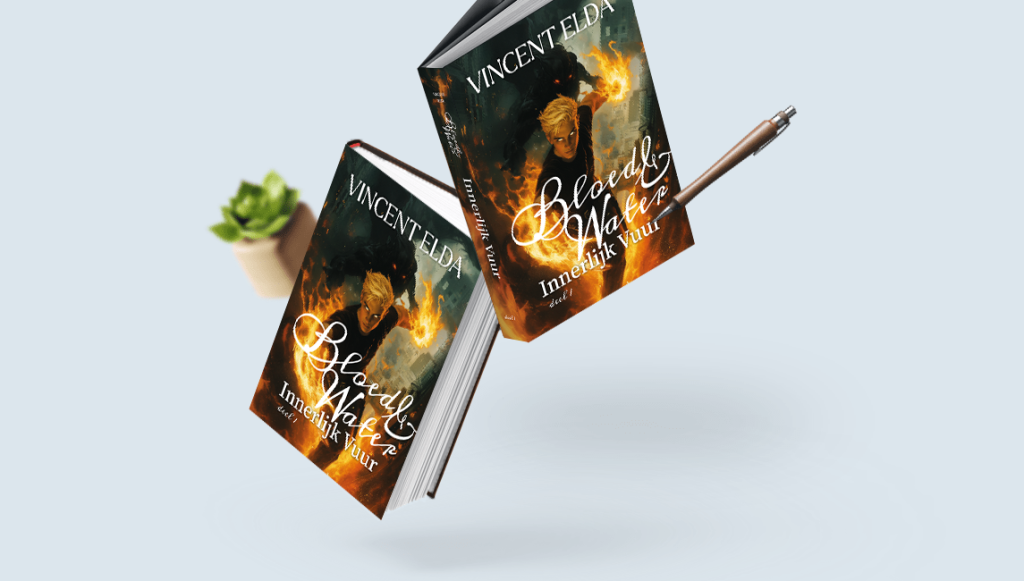
Blood & Water doesn’t work that way.
When protagonist Justin wakes up with no memory, you know exactly as much as he does. Zero. When he meets Lightbringers for the first time, you’re discovering them together. When the world feels dangerous and confusing, you’re feeling that too. To amplify the feeling of being him at that moment, I’ve chosen First Person and written my books in present tense. And yes, that is exactly like Suzanne Collins did in The Hunger Games.
This is a feature I specifically designed into the story.
What You’re Getting Into
Let me be clear about what Blood & Water: Inner Fire has to offer.
You’ll love this if you want:
- Fast-paced action that doesn’t let up
- A protagonist figuring things out in real-time (not explaining things he already knows)
- Magic that feels dangerous and mysterious
- A post-Catastrophe world that feels lived-in and real
- Present tense writing that puts you IN the moment
- Mystery woven into the fantasy
This might not be for you if you prefer:
- Detailed world-building explanations upfront
- Slow-burn political intrigue
- Traditional “chosen one” narratives where the hero knows their destiny
Present Tense = Present Tension
You will notice immediately Blood & Water is written in present tense. Not past tense like most fantasy.
Why did I choose this? Because everything feels like it’s happening right now.
“The wolf emerges from the trees. Justin’s hand trembles.” No safety net. No “this already happened and the character survived to tell about it.” Just pure, unfiltered experience.
If you’ve read The Hunger Games or Divergent, you know this feeling. That breathless momentum where you can’t stop reading because the danger feels immediate and real. That’s exactly what I was going for.
For Sanderson Fans: Yes, There’s a Magic System
I learned so much from reading Brandon Sanderson’s work. The way he builds intricate, logical magic systems in Mistborn and The Stormlight Archive taught me that magic should have rules, consequences, and meaning. And yes, as a debut author I’ve watched his lectures more than once!
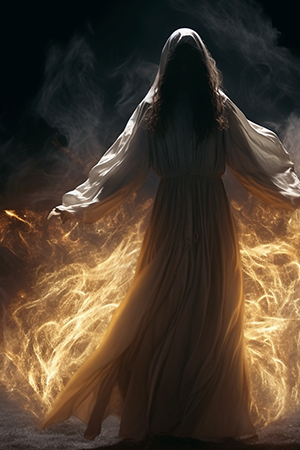
The difference in my approach: instead of explaining how the magic works upfront, you figure it out alongside Justin. When he discovers his connection to fire, you experience his confusion, his fear, his slow understanding.
The magic system is just as complex as I could make it, but you’re solving the puzzle in real-time instead of reading the instruction manual first.
Both approaches work. This one just felt right for the story I wanted to tell.
For Hunger Games Fans: That Same “Can’t Put It Down” Energy
Remember staying up until 3 AM because you had to know if Katniss survived the arena? That’s the pacing I aimed for.
Short chapters. Fast action. No wandering side plots. Everything matters because you’re locked into one perspective, experiencing every moment as it happens.
When Justin faces danger, I want you to feel it. When he makes a connection with someone, I want you to be invested. When he discovers something about his past, I want your heart to race.
And just like Katniss navigating Capitol politics she doesn’t fully understand, Justin is piecing together a world of Leviathans, Lightbringers, and something called the Collective. You’re solving the mystery with him.
The Witcher Meets Young Adult
I love that gritty, lived-in fantasy feeling from The Witcher. The world is harsh. People have complicated motivations. Violence has consequences.
Blood & Water captures that darkness but filters it through a younger protagonist discovering his place in a broken world. You get complexity and moral ambiguity with the immediate, visceral storytelling I loved in YA novels.
Post-apocalyptic setting? Check. Competing factions with different ideologies? Check. A protagonist trying to figure out who to trust? Absolutely.

So why I write the way I did:
And Why This Approach Works (I Hope).
Here’s the thing about strict perspective: it makes you feel more. When Justin doesn’t understand why everyone treats him differently, you feel his isolation. When he experiences his first connection with the inner fire, you feel that confusion and power. When he has to make impossible choices, you’re right there weighing the options with him.
You’re not watching someone else’s story. You’re living it.
The Bottom Line
Blood & Water: Inner Fire is my attempt at bringing together what I loved most about the books that shaped me as a reader: Mistborn’s magic complexity meets The Hunger Games’ can’t-stop-reading momentum meets The Witcher’s dark world. All told through a perspective that keeps you locked in from start to finish.
No omniscient narrator explaining everything. No safety net. Just you and Justin (and others) figuring out this broken, beautiful, dangerous world together. One chapter at a time. One revelation at a time. One heartbeat at a time.
As a debut author, I’m still learning. But I poured everything I love about fantasy into this series. I made choices that felt natural for me and I hope you’ll give it a chance.
Ready to experience the story? Start Blood & Water: Inner Fire today.